|
|
Sensei Bob NohaStudent comments“Bob Noha is the kindest, most respectful, good-humored and effective teacher I’ve ever met, in any field. Highly recommended.” John Records *** “Bob Noha is the best teacher I have ever had. When I started training, I had almost no body awareness, and had always been a couch potato. I also didn’t have much confidence. Not only did Bob teach me Aikido, he was incredibly patient, and let me learn at my own pace without making me feel bad about myself. He worked with me to overcome my fears of falling. He showed me kindness, caring and patience. He made me believe in myself as a person who could do physical activities. Now I’m learning Tai Chi from Sensei and marveling at how the benefits are crossing over into my Aikido.” Robin Gibson *** “My decade of training with you has had extraordinary consequences for my life. We become like our teachers and I have never observed your better in any venue. Again, Bob, thanks. You are a marvelous man and a marvelous teacher.” Jim Pearce ____ Bob Noha, Martial Arts Background Began Aikido training in Mountain View in 1966 under Ed Riggs and Sig Kufferath. Started training with Robert Nadeau, 7th Dan Shihan (direct student of the founder Morihei Uyeshiba) in late 1966. Continuously trained with Nadeau Sensei since then. Began teaching in Mountain View in the late 1960’s as an assistant. Started the first Aikido school in the Washington D.C. area in 1970. Taught in the Washington area until 1975. U. S. Air Force Security Police Tactics Instructor, Andrews Air Force Base, 1975. Opened the first Aikido school in the Buffalo NY area in 1975 until 1977. Returned to the Bay area in 1977 and trained at Aikido of San Francisco with Nadeau Sensei. Opened Aikido of Novato in 1982 and Aikido of Petaluma in 1983. Aikido of Petaluma is a member school of the California Aikido Association and the Aiki-kai World Headquarters, Tokyo Japan. Traveled to Japan for training at the World Aikido Headquarters in 1998 and 1999. Fifth Dan January 2000. Studied T’ai-chi Ch’uan since 1972. Teachers include Robert W. Smith and other senior students of Professor Cheng Man-ching. Also trained in NY City with Professor Cheng on regular trips from 1973 to 1975. Also studied Judo, Kenpo Karate, Pa Kua Chang, Hsing-I and Western Boxing. Contributed to one Aikido book and two books on Chinese Martial Arts. Recent article on Judo Master Kyuzo Mifune appeared in the Aikido Journal. ____ from The Argus Courier May 14, 2003 Profile: Bob Noha For 20 years, Noha has been offering the gentle martial art of aikido at his Petaluma school. This Saturday, a celebration of those two decades takes place. By JUD SNYDER ARGUS COURIER STAFF You could say Robert Noha's life is immersed in Oriental philosophy. But that's only partially true, for Noha has his Aikido of Petaluma school firmly planted amid the realities of the 21st century. What he's bringing, to summarize ever-so briefly, is "gentle martial arts for the pressures of daily life." Petalumans will have an opportunity to see and get a grasp on Aikido's "gentle martial arts," Saturday, May 17, when Aikido of Petaluma holds its 20th anniversary celebration from 10 a.m. to 5 p.m. Location is the School of Ballet, Western and Howard streets. Admission is free. Demonstrations and classes will be held from 10 a.m. to noon, followed by an hour of lunch and aikido videos. Highlight of the afternoon will be a free seminar with Robert Nadeau, Sensei of the seventh Dan, who has studied with the actual founder of aikido, Morehei Ueshiba (1883-1969). "Sensei" means teacher or director and Dan is the ranking (The highest is ninth, Noha is a fifth Dan). In Noha's future plans this year is a children's aikido program, for kids from 9 to 13 years of age. This starts July 10. Noha's philosophy concerning aikido is quite concise. It brings in the eternal "yin and yang" struggle humans face daily. "You see, at one level are the tasks you have to perform, the exterior aspects of life, your job, raising a family," he began. "At the same time there's an interior need of peace and harmony in order to function in the real world. People, many times, choose one over the other. Aikido brings these elements together." Relaxing in the immaculate living room of his Baywood Drive home with its Mission furniture and modest selection of Oriental art, Noha said this achievement of inner harmony accompanied with self-defense techniques to develop confidence, can be seen by the instructor. "When the training is going well, students will be 'in balance.' I can get feedback and this in turn helps me to improve myself. Progress can be sensed for we're dealing with a diversity of people, from children to seniors of both genders," he said. Noha's good friend, John Records of the Committee on the Shelterless (COTS), phrases it this way: "Although the techniques certainly can be used effectively for self-defense, the emphasis is on helping students to become well-rounded individuals with the physical, emotional and spiritual aspects of their being developed in harmony." Records put together a Web site for Noha's school: aikidopetaluma.com. Phone number is 762-7632. Simplistically put, aikido lies somewhere in between the strictly martial arts of judo and karate and the slow, graceful exercises of t'ai chi Oriental movements. Noha's journey to his present status is fascinating. At a glance, "Noha" could be a Japanese name, but he was born in Chicago of Czechoslovakian parents and that's their full name. "It's true. My brother visited Prague a few years back and brought back a page from the city phone directory with several columns of 'Noha' names listed." Noha's father was a parachutist with the U.S. Airborne forces during the Second World War and the Noha family did a lot of traveling. "My father parachuted into Japan the very day and hour they were signing the peace treaty aboard the U.S.S. Missouri." As a teenager living in Menlo Park and taking boxing lessons, Noha saw a small ad in a magazine concerning a book called "Aikido in Daily Life," written by Nadeau. "There was something intriguing about the ad and it led me to visit an aikido school nearby," said Noha. "The teacher was Bob Nadeau himself and the minute I walked in the door it felt like home to me." He added, "There was something there that I knew I wanted to spend time with, a most unusual choice for a teenager at that time, I admit. I never left aikido after that." Noha's family moved to the east coast and settled in Maryland near his father's base. He enrolled in the University of Maryland, majoring in philosophy (it was the aikido "impact" at work), earned his degree, served a hitch in the U.S. Air Force reserves, set up an aikido school in College Park, Md., then moved to Buffalo where he started another aikido school. He also worked teaching security police forces aikido techniques at various military bases. Then it was back to California. With 20 years of aikido of Petaluma under his belt, a sense of permanence no doubt exists in the Noha family. His wife, Martha, was a student of his in the Washington DC area, and they have two adult children, David, 32, and Emily, 26. The house also is the home for two cats, Archie, and a large Maine Coon called Max. It was Albert Schweitzer who said, "there are two means of refuge from the miseries of life: music and cats." He was unaware at the time, apparently, of the existence of aikido. Noha, 52, is currently immersed in Joseph Campbell's book, "Sake and Satori," an exploration of Japanese folklore by the late author, and is an avid reader of history books dealing with all eras and World War II, especially those by Stephen Ambrose. An unobtrusive cabinet in the living room conceals a television console and a collection of CDs, mostly classical. He subscribes to the British journal, "The Economist," to get a balanced view of world affairs. "Balance" is an important word in aikido culture. "As a sensei, I have a sense of obligation to the students, a need to help them interact better with their families and co-workers. The aim is to instill a feeling they can make more of their life than it currently is." 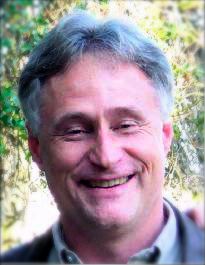 |